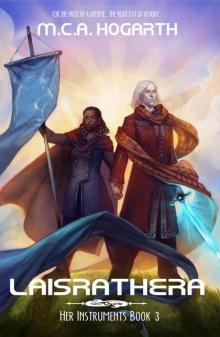
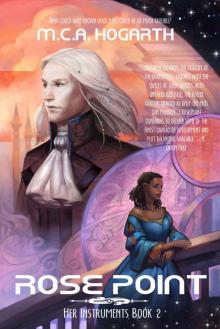
The princes game series.., p.1
The Princes' Game Series Summary, page 1


Princes' Game Series Summary
M.C.A. Hogarth
Copyright © 2018 by M.C.A. Hogarth
All rights reserved.
No part of this book may be reproduced in any form or by any electronic or mechanical means, including information storage and retrieval systems, without written permission from the author, except for the use of brief quotations in a book review.
ISBN-13: 978-1790711307
mcahogarth.org
Contents
Preface
Introduction
A Word About Ratings
The Series Reading Order
Book 1: Even the Wingless
Wingless Art
Sketch 1
Sketch 2
Sketch 3
Sketch 4
Sketch 5
Sketch 6
Sketch 7
Book 2: Some Things Transcend
Transcend Art
Sketch 1
Sketch 2
Sketch 3
Book 3: Amulet Rampant
Amulet Art
Sketch 1
Sketch 2
Sketch 3
Book 4: Only the Open
Only the Open Art
Sketch 1
Sketch 2
Sketch 3
Book 5: In Extremis
Extremis Art
Sketch 1
Sketch 2
Sketch 3
Sketch 4
Sketch 5
Sketch 6
Sketch 7
Sketch 8
Sketch 9
Book 6: From Ruins
Author Sketches
Sketch 1
Sketch 2
Sketch 3
Sketch 4
Sketch 5
Sketch 6
Sketch 7
Sketch 8
Sketch 9
Sketch 10
Sketch 11
Sketch 12
Sketch 13: The Cast
Jokes
Joke Sketch 1
Joke Sketch 2
Joke Sketch 3
Joke Sketch 4
Joke Sketch 5
Joke Sketch 6
Joke Sketch 7
Joke Sketch 8
Joke Sketch 9
Joke Sketch 10
Joke Sketch 11
Joke Sketch 12
Joke Sketch 13
Joke Sketch 14
Final Thoughts
About the Author
Preface
You have now in your hands the second edition of this Synopsis Project, which includes the summary of the final book in the series, From Ruins, along with all its art! If you have already downloaded the first edition, you need not re-read the earlier synopsis; they haven't changed. I have, however, added new art in all the sections, so be sure to page through and have a look.
Introduction
The Peltedverse is intended for everyone. There are gentle stories, and adventure stories; there are romances and war stories. There’s epic, enormous conflicts, and quiet, intimate ones. It’s supposed to reflect real life that way: a kind reflection, where people might struggle but they triumph. One of the other ways it reflects life, though, is that world-changing events are powered by violent conflicts, and the people who can no longer bring themselves to open their newsfeeds feel lost. In real life, that’s bad enough, but it’s a special kind of awful in fiction, which is where you turn to when you need to escape for a while.
In the Peltedverse, it’s the Princes’ Game series that’s making the equivalent of headline news, and I know, because some of you have told me, that it’s not your cup of tea and that you wish I hadn’t put so much important stuff in it because you felt left out. That this universe, which you’ve used as your comfort, has books in it you feel you have to avoid, and that this makes you feel excluded.
This is totally uncool, and I have decided to fix it.
Enter this guide, which synopsizes each book of the Princes’ Game series. These aren’t back of the book blurbs, intended to entice you into reading the books (though if they work that way, great!). These are honest-to-goodness synopses, definitionally full of spoilers, and by the time you’re done reading them you should have the context you need for future books. You’ll even be able to re-read Dreamhealers and Her Instruments and see things in them that you might have missed.
Does this guide replace the experience of reading the series? Unfortunately not. My books depend on every scene; I often think of their emotional climaxes as having to be earned by all the things that come before. The Princes’ Game series is, in effect, a single story culminating a redemption arc that needs six books to earn that pay-off. No matter how hard I try, I’m not going to be able to duplicate that experience by summarizing what happens. That’s for the best, though, because otherwise why go through all the work of writing them…! And maybe some of you will want to give the series a try if you’re armed with the spoilers; I often do that myself, and in fact I had an awful experience with a really lovely book because I wasn’t forewarned that it had a happy ending, and I felt jerked around by the middle parts where it felt like things would never work out. I would have loved that book had I been prepared (it was The Goblin Emperor, for the curious). So if you feel like you want to jump into the series after reading the synopses, do that! But if the synopses make you feel like it was a good decision to keep the series at arm’s length, that’s awesome too. Those of you who have read the series might enjoy this guide as a refresher, or for the insight into my brain. Or you might even have missed some of the things I’m talking about… you never know!
All I want for this guide is for everyone to feel like they’re on the same page, no matter what they’re comfortable reading.
Having said that, this whole thing is a little tongue in cheek. I think humor helps keep the hard stuff a little more distant, and it also makes the synopses less dry. Plus, it’s kind of an absurd exercise, trying to turn 600,000 words worth of story into a few pages! I figured I’d have fun with it, and maybe you would too.
But enough with the jawing. Let’s get to the story. Compressed.
A Word About Ratings
I’d give the entire Princes’ Game series a global rating of R (by the movie scale). Lots of violence and sex of various kinds, but not blow-by-blow graphic about any of it. Most of my scenes use “snapshot moments”... I’ll pick one detail that makes it feel real but I won’t linger, and for the most part I’m less interested in the physical reality of what’s happening and more in the emotional one. I don’t really care how someone gets tortured. I want to know what went through their head while it was happening. (This is what makes it hard for a lot of people, I’ve been told.) So that’s the tone of the whole series. Different installments in the book have slightly more or less of all this stuff, and the type of violence or sex changes. I’ll try hard to tell you the nuances.
If reading a synopsis of things happening to people is troubling to you, please be forewarned about the entire Study Guide; I don’t go into detail, but I will tell you that things happened, and often to characters you care about. Be prepared and read (or skim) when you’re ready.
The Series Reading Order
Even the Wingless
Some Things Transcend
Amulet Rampant
Only the Open
In Extremis
From Ruins
Book 1: Even the Wingless
“The book where telempathy > abusive dragons.”
Rating: R. Rape. Violence. Outright torture. Drug abuse. Slavery. Lots of sex, most all nonconsensual.
* * *
This is the story that starts it all. Not just the series, but the chain of events that rearranges galactic politics for three separate nations. And it starts with Lisinthir Nase Galare, who is, in the words of one of my favorite reviews,“ the most bad*** character I've seen in one of Hogarth's stories, and you'll cheer for him the entire time.”
Our set-up then. The Chatcaava are a race of small, bipedal, mammalian (yes, this is a ?) dragons who can shift shape. Their empire is enormous and full of warring factions. The current Chatcaavan Emperor rode to power on his ability to play them against one another to keep them in check, and now straddles the throne of a political power focused on its ability to conquer and annex territory... because the other thing you do with people who like fighting is direct that fight outward. This is a social system that rewards the strong and enslaves or destroys the weak, and its pinnacle is the throneworld court. The Chatcaavan males who go there do so to prove to one another they still deserve their positions by savaging one another, and the one who can beat them all is the one who gets to lead.
If you think this sounds unsustainable, you’re not wrong.
Women in this subculture are chattel, prizes to be passed around (or distractions to make your enemies soft). They’re sorted into harems, and naturally the most powerful male has the largest number of females. In addition to two harems and a nursery full of baby dragons bred on them, the Emperor has one extra female, his Queen. In bygone, better ages, this female was the known as the Queen Ransomed, so called because she held everyone’s behavior to account: she was ransom for their moral conduct. In this current, debauched age the position has devolved into the Slave Queen, the most exalted and most debased of all Chatcaavan females.
Chatcaava fight for titles. To be titled is to have a destiny. The moment you earn one, you leave your name behind. So the Emperor
The Empire has a treaty with the Alliance which it largely ignores. One of its most egregious treaty violations is the trading of Alliance citizens as slaves, which it buys from pirates or picks up from raids. There’s one such slave in the palace, a Seersa girl the Queen named Khaska. As the novel opens, a new set of ‘special slaves’ is brought to the palace for the approval of the Emperor. This delivery is timed to coincide with the arrival of the newest ambassador: Lisinthir, on loan to the Alliance by the Eldritch. The Alliance wanted an esper ambassador from a less pacific race than the Glaseah, and the Eldritch were all they had. Every other ambassador had failed to get any concessions out of the Chatcaava (and has come back traumatized, injured, or dead, to boot)... the Alliance is hoping someone who can read minds will have better luck. If he can stay alive.
They got lucky in Lisinthir. Or rather, they didn’t, because it wasn’t luck at all. Liolesa, the Eldritch Queen, picked him for his aggression and backbone. Her gift for seeing where things fit suggested Lisinthir was the man for the job, so she liberated him from the Eldritch court, where he was suffocating (or scandalizing people by calling them on their petty insults and dragging them to the dueling field). She warned him it would be a hard assignment. So did the Alliance team that prepped him for it. But he felt useless at home. This seemed like a chance to put his talents, his intelligence, and his mettle to the test.
“Go to the Empire,” the Alliance told him. “Find out whether they’re angling for a war or if this is just the way they are. Try to get things changed. Find out where they’re stealing our people from and if you can, stop that.”
Lisinthir arrives then, and finds himself an outsider in a sadistic court. He’s treated as an alien—someone who by definition cannot participate in the contests that establish rank in the hierarchy—so he can’t make any progress. Worse, they’ve decided to celebrate his arrival by parading their newest Alliance slaves in front of him, one of whom isn’t an Alliance citizen at all, but the crown princess of the Eldritch kingdom, who went missing on an ill-advised jaunt off-world to see her beau. He allows them to believe this insult doesn’t upset him, and his sangfroid pricks the interest of the Emperor.
The Emperor is a product of his environment. Entirely. He won the throne by being the most Chatcaavan Chatcaavan possible: by killing, raping, and dominating his way to the pinnacle of power. He sees nothing wrong with this; he won fairly, by Chatcaavan standards. But there’s a faultline in his personality, and it’s linked to his intelligence, and it’s that he’s curious. He wants to understand things. Unlike many Chatcaava, he’s as willing to use information to win his battles as talon and teeth. And Lisinthir’s behavior puzzles him, and puzzles interest him.
He decides he wants to take Lisinthir apart to find out what makes him tick. And Lisinthir, sensing an opening, decides to let him try.
The first third of the book is about Lisinthir’s maneuvering to liberate the crown princess and the other slaves. He’s abetted in this process by Khaska: in reality Laniis Baker, a former Fleet lieutenant who had the poor fortune to be captured. He is also, surprisingly, helped by the Slave Queen. Because he treats her well, and that confuses her. She’s lonely, and she can’t help but be drawn to him.
Together, they hatch a plan. As one of the few winged females, the Slave Queen can shapechange. If she can learn the pattern of the Eldritch princess, she can impersonate her while Lisinthir has the real Eldritch and the other slaves smuggled out of the palace. This Lisinthir arranges with the Alliance through his contact, an Alliance windtalker who can speak fluent Eldritch and uses this as an additional layer of security in their communications.
(This windtalker is, it turns out, Jahir; Liolesa offered him up, or tried. Fleet already knew about him and Vasiht’h because of their work with Fleet personnel on Starbase Veta, so they had already thought of contacting him. How that happened is the subject of a side-story novelette, “Jackal Chest.”)
The process of shapechanging has two parts. The Chatcaava touches a person and draws their pattern from them (known as the Touch). And the Chatcaava Changes, in which they shift their shape. When the Slave Queen attempts to Touch the Eldritch princess to learn her pattern, the princess pushes her away; like almost all Eldritch, the princess is a touch-telempath, and she finds the intrusion of the Slave Queen’s mind too upsetting. When the Slave Queen reveals this to Lisinthir, he offers her his pattern instead.
She Touches him; he touches her, and in doing so learns something of her mind. And he weeps for her, for her imprisonment in her tower, for her loneliness and desolation. Seeing her misery reflected on the face of an alien—for Chatcaava cannot cry tears—the Slave Queen is changed herself, forever.
They succeed in impersonating the princess; the slaves are secreted away (including Khaska/Laniis). The Slave Queen suffers the public torture intended for the princess, and Lisinthir is forced to watch her endure it. It’s the only way they can buy the slaves enough time to make it over the border. The Emperor, having little experience with Eldritch and no experience with the shapechange (more on that later), does not realize he is tormenting a fake, and the escape is successful.
Later, Lisinthir is hauled before the Emperor and accused of arranging the escape. He does not deny it—in fact, he boldly claims the deed, and tells the Emperor they were his people and he could do no less. The Emperor finds this infuriating, but also fascinating, because Lisinthir is acting like a Chatcaavan, not an alien, and like a Chatcaavan Lisinthir stole back the chattel he felt belonged to him. So he lets Lisinthir live, and even stay. And he starts wondering just how far the draconic streak extends in this alien.
What follows then is a series of increasingly difficult emotional and psychological tests. The Emperor wants to know if Lisinthir has “horns” or if he’s just another weak alien. Lisinthir wants to understand whether the Empire is going to go to war with the Alliance, and is committed to forcing the Empire to behave like a treaty partner rather than a rapacious gang. They both think their time together is an opportunity to learn about one another.
This is where all the rape comes in, because it’s a tool the Chatcaava use on one another if a male is too useful to be killed outright, but too dangerous to be ignored. They strive to dominate one another in private, rather than in public with duels (which might result in death). The first time the Emperor inflicts himself on Lisinthir, Lisinthir thinks seriously of giving up and going home, until the Slave Queen explains that this is a good sign: it means the Emperor is taking him seriously. Alien males don’t get raped; they’re toyed with, they’re not treated as serious rivals. If he can stick with this course, he might manage to accrue enough power to get what he wants.
So Lisinthir sticks with the course. Hard. He starts fighting back, and even succeeds in besting the Emperor in bed. He reflects that he’s sexually assaulting a head of state, and wonders how he can hold that in his head along with who he is. These thoughts continue to trouble him as he tries to walk the line between the moral behavior he was taught, and the behavior necessary to be respected in the Empire. The challenges become more fraught when the Emperor discovers Lisinthir’s weakness is, in fact, the weak and powerless. He threatens random innocent females to see if he can coerce Lisinthir into behaving, and this works. Sort of. Because the Emperor expects humiliation to make Lisinthir biddable, and all it does is make him angry... and Lisinthir takes that out on the Emperor’s administrative helpmeets, Second and Third. He starts forcing them into giving the Alliance concessions, so effectively that Second tries to poison him. This is how Lisinthir takes up smoking hekkret, the only form of that poison that might convey an immunity to its more concentrated form.