The bookmans wake, p.25
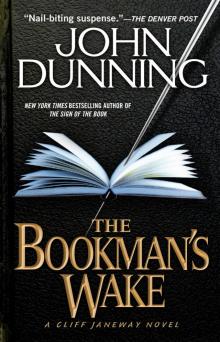
The Bookman's Wake, page 25


“Ms. Amy Harper wasn’t dead, when I left her here half an hour ago.”
“That’s Mrs. Amy Willis to you, dum-dum. You can’t see her now. She’s busy.”
“She’s having a re-yoon-yun with her old man,” the other one said, and they both laughed.
I started toward the house. They got out of the car. They were punks, I had seen their kind many times, I had sweated them in precinct rooms when I was a young cop working burglary. When they were fifty, they’d still be seventeen.
The one riding shotgun had the James Dean look, dark, wavy hair over a fuck-you pout. They thought they were badasses and I was an old fart. That made two surprises they had coming.
“This asshole don’t hear so good,” the James Dean act said.
His partner said, “What’ll it be, Gomer? . . . You wanna walk out of here or be carried out strapped over the hood of this car.”
“I’ll take the hood, stupid, if you two think you can put me there.”
I veered and came down on them fast. I caught little Jimmy a wicked shot to the sternum that whipped him around and juked him across the yard like Bojangles of Harlem, sucking air till he dropped kicking in the mud. His partner jumped back out of range. My coat was open and he’d seen the gun, but he’d already seen enough of what went with it. I stepped over Little Jimmy as the ex loomed up on the porch.
“Who the hell’re you?” he growled.
“I’m Rush Limbaugh. Who the hell’re you?”
“I don’t know you.”
“I’m taking a poll to see who’s listening to the Asshole Radio Network. Maybe you’d better get out of my way.”
“Maybe what I’ll do is come down there and kick your ass.”
“Maybe what you’ll do is shit, if you eat enough.”
He started to launch himself off the porch. He balked, almost slipped, and stood tottering at the top.
Then he came, with too little too late. His pal yelled, “Look out, Coleman, he’s got a gun!” and he balked again, missed his step, and splashed face-first in the mud.
I went around him in a wide circle. “So far you boys are terrifying as hell,” I said. He struggled to one knee. I asked if he could sing “April Showers.” I hate to waste a line like that, but I know he didn’t get it. I walked past him, close enough for him to grab my leg, but he didn’t. I knew he wouldn’t. By the time I got Amy to open the door, they were gone.
∗ ∗ ∗
Amy stood at the window and watched them go. It was the last vestige of her childhood, the beginning of a long and wonderful and fearsome journey.
“C’est la vie,” she said to the fading day.
I thought about the woman in Irwin Shaw’s great story of the eighty-yard run. I told Amy to read it sometime and take heart.
She had never heard of Shaw. I felt a twinge of sadness, not only for the fleeting nature of fame but of life itself. I told her what a powerhouse Shaw had been when he was young, and how the critics had come to hate him and had made him the most underrated writer of his day. She didn’t understand why people would do that, so I explained it to her. Shaw made a lot of money and they never forgive you for that. She asked what the story was about and I said, “It’s about you and the damn fool you married, when you were too young to know better.” I didn’t want to diminish it by telling her any more than that.
We gathered ourselves for the trip to town. I’d be leaving fourteen boxes under Selena Harper’s roof for one more night.
“I don’t think we made much headway,” Amy said.
“We didn’t find Eleanor. Maybe we found you, though.”
She didn’t say anything. She gave me the key and I locked the house. She sank back in the car and closed her eyes, a picture of sudden weariness.
I told her what I had in mind as we drove. “I’m going to call a man who knows all there is to know about this stuff. If I’m right, he’ll want to fly up from Los Angeles and look at it.”
“It’s in your hands. I trust your judgment and I won’t go back on you, whatever you decide to do.”
I pointed out the motel where I’d made the stash. She gave it a polite look and we swung west with the night, into the freeway, into the driving rain.
39
The night was full of surprises. The first came when I called Leith Kenney from Amy’s room at the Hilton. She sat behind me, discreetly nursing her child while I punched in the call.
It rang three times in L.A. and a woman answered.
“Mr. Kenney, please.”
“I’m sorry, he’s not here.”
“Do you know when he’ll be back?”
“I really can’t say.” There was an awkward pause. “He’s gone in to a meeting tonight and it’ll probably run late. Then he’s going out of town.”
I blinked at the phone but recovered quickly. “I’m calling from Seattle.”
“That’s where he’s going. Is this Mr. Pruitt?”
I felt my heart trip. I looked at Amy in the mirror, but she was busy changing breasts and didn’t notice anything.
“Yes,” I said, thinking on my feet. “Yes, it is.”
“Has there been a change of plan? This is Mrs. Kenney. Lee will be calling me when he gets there. I could give him a message.”
“I don’t know ... I might have to change things.”
There was a brief silence. It would really help, I thought, if I had the slightest idea what the hell I was talking about.
“Well,” she said, “would you like to leave a message with me?”
“I’ll catch him here. Is he staying at the same hotel?”
“Yes, the Four Seasons. They should get in early tomorrow morning.”
“Is Scofield coming with him?”
“I don’t think you could keep him away, Mr. Pruitt.”
“I’ll see them then. Thanks.”
I hung up and stared at the floor. Pruitt stared back at me.
Amy was looking at me in the glass.
“Something wrong?”
“No,” I said. “Everything’s fine.”
She went across the room and put her children down. I headed for the door and got the second surprise of the night.
“I remembered something today,” she said. “I thought of the man who came and looked in the attic just after Mamma died. His name popped right into my head. I knew I’d forget it again, so I wrote it down.”
She fished in her jeans and came up with a paper. “His name was Otto.”
Again I walked through that cluttered bookstore. I held a bag of Ayn Rand and wondered why the man wasn’t there. I looked up a dark stairwell leading to . . . what?
“Otto Murdock.”
She looked at me hard. “How’d you know that?”
40
I headed north on the freeway and hoped I’d remember where. Murdock’s was. I found it after twenty minutes of trial and error. I arrived on a wave of déjà vu. It looked exactly as I’d last seen it—the same dim light shone from deep in the building, the same OPEN sign was propped in the window and tilted at the same slight angle—even the rain was the same, as if the world had turned back on its axis and erased the last seventy-two hours. I pushed open the door and called his name. There was no sound. If any customers had come in since last Friday night, they had left no evidence of their presence. They had come, looked, and left as we had, perhaps with a slight sense of unease. Those who knew Murdock would figure it as another bout with demon rum: the others would mind their own business.
I crossed the store and looked in the back room. Everything was the same . . . the dim light in the corner . . . the rolltop desk with its piles of magazines and papers . . . the canvas briefcase pushed off to one side with my note still taped to the handle . . . the rickety stacks of books and the thick carpet of dust, undisturbed where we hadn’t walked and already filming over where we had. I followed our three-day trail across the room and into the stairwell. I looked up into the black hole and called him, but I knew he wasn’t going to be inviting me up. My voice felt heavy, like a man shouting into a pillow.
I touched the bottom of the stair with my foot. I leaned into it, took a deep breath, got a firm hold on my gun, and started up. The light faded quickly: there was none at all after the fifth step and I had to go by feel, knowing only that the next step would be onward and upward. I had a sense of movement coming from somewhere . . . music!. . . and now the feeling that it had all happened before was as sharp as a scream. I planted each foot, letting my fingers slip along the inner edge of the wooden banister and guide me up. Don’t screw up again, I was thinking: don’t make the same mistake twice.
Now I could hear the melody, some classical piece on a radio. I saw a thin line of light. . . the crack at the bottom of a door. It dropped below eye level as I climbed higher, and a kind of sour dampness lay over the top. And I knew that smell, better than the people of Seattle knew the rain. In my old world it came with the smell of Vicks, the stuff homicide cops use to help them get through the bad ones.
I was standing at the top with an old memory playing in color and sound. My partner was a skinny guy named Willie Mott, who was giving me the lowdown on Vicks VapoRub. This one’s ripe . . . put a little glop of Vicks up each nostril and you won’t notice it so much.
I stood at the door of hell and nobody had brought the Vicks.
I touched the wood with my knuckles. Found the knob. Gripped it carefully by the edge, with the joints of my fingers and thumb.
The latch clicked: the door creaked open and the warm moist air sucked me in.
I retched.
I backtracked and stumbled and almost fell down the stairs.
On the third try, I made it into the room. I cupped my hand over my nose and got past the threshold to the edge of a ratty old sofa.
A single lamp near the window was the only source of light... a forty-watter, I figured by the dim interior. Dark curtains covered the window. I couldn’t see the body yet, but the room was full of flies. The music poured out of an old radio. It wasn’t “Rigby,” just something he’d been listening to when he finally ran out of time. I moved toward it, still fighting my gut. I hadn’t seen much of anything yet.
There was the one window.
A closed door across the room.
A pile of books on the table.
A typewriter ... a pile of magazines ... a roll of clear sealing tape . . . and a bottle of lighter fluid.
I moved around the table, watching where I walked. A wave of rotten air wafted up in a cloud of flies.
I tasted the bile. What I didn’t need now, after compromising the first scene, was to throw up all over this one.
The lighter fluid might help. I know it’s an evil solvent; I’ve heard it can get in your blood through the skin and raise hell with your liver. But it’s stronger by far than Vicks, and even the smell of a cancer-causing poison was like honeysuckle after what I’d been smelling.
I put my handkerchief on the table, then turned the plastic bottle on its side and pried open the squirt nozzle. Liquid flowed into the rag. I touched only the ribbed blue cap, so I wouldn’t mess up any prints on the bottle itself.
I made the wet rag into a bandanna. Found a roll of cord and cut off a piece, then tied it over my mouth and nose.
I was breathing pure naphtha. It was cold and bracing and it had an immediate calming effect on my stomach.
If it didn’t kill me, I could function like a cop again.
I found him sprawled on the far side of the table. He had been there most of a week from the looks of him. His face was gone, but I could guess from the wispy white hair that he had probably been Otto Murdock.
I didn’t know what had killed him: there wasn’t enough left to decide. What there was was hidden under a carpet of flies.
Let the coroner figure it. Whatever they pay him, it’s not enough, but let him earn it... and in the end tell supercop what I already knew.
Murdock hadn’t keeled over and died of old age.
And Janeway hadn’t done it. This would break his super heart, but when the reaper came calling, Janeway was still in Denver, doing what came naturally. Trying to fit John Gardner into his proper shade of orange, with murder the last thing on his mind.
I didn’t see any weapon. Nothing on the table looked promising as a motive or a clue.
There were no ashes.
No sign of a struggle. Even the chair he had been sitting in was upright, pushed back slightly as if he’d been getting up to greet a visitor.
I went to the far door and opened it.
His bathroom. Nothing out of place there.
I was feeling lightheaded by then: the naphtha was doing its dirty work. The skin under my eyes felt like blisters on the rise.
I ripped off the rag and got out of there.
Downstairs, I looked through his rolltop.
Some of the notes in the pigeonholes were three years old.
I looked through the drawers.
Bottle of cheap bourbon, with not much in the bottom.
Letters . . . bills . . .
The sad debris of a life that didn’t matter much to anybody, not even, finally, to the man who had lived it.
Pushed off to one side was the canvas bag. Eleanor had wanted to look inside, but I wouldn’t let her.
I opened it now and hit the jackpot.
A thick notebook, old and edgeworn . . .
I seemed to be holding Darryl Grayson’s original subscriber list. With it was a manuscript, a dozen pages of rough draft on yellow legal paper. I knew the handwriting, I had seen it on other papers in Amy’s attic. The top sheet was a title page, aping Victoriana.
THE CRAVEN
A Tragic Tale of a God’s Downfall Told in Verse by Richard Grayson, A Witness
∗ ∗ ∗
I took it all and went back to Aandahl’s and read it. I read it many times. I was reading it again at midnight when Trish came home.
41
She had returned almost a full day early. There was a click and the dogs swarmed her at the front door.
She looked at me across the room, as if she hadn’t expected me to be there and didn’t know whether to be disappointed or relieved. “You’ve changed,” she said, and I gave her an old man’s grin. She threw her raincoat over a wicker basket, came slowly around the couch, and sat facing me with an almost schoolmarmish primness.
“I’ve been thinking about it,” she said. “Been running it through my head all the way home from Albuquerque, trying to figure out what I ought to do.”
“What’s the verdict?”
“I’m in it now.”
“I thought you always were.”
“It’s different now. I’m in it with you.”
This was happy news. I felt a warm glow at the sound of it.
She said, “Whatever happens, we go together.”
We didn’t need to hash out the ground rules. When you connect with someone, things like that are understood. Suddenly we were like police partners, comparing notes, poring over evidence. There was a lot to be done, and the first commandment was the test of fire. You never hold out on your partner.
We ate a late supper and talked into the morning. For the first time in a long time I broke bread with a good-looking woman without thinking of Rita.
42
She had covered a lot of ground in two days. She had flown out of Sea-Tac at nine-forty Pacific time on Saturday night. Her destination was St. Louis, where she arrived in light snow at two-twelve in the morning. She had a room reserved, but her old companion, insomnia, was along for the ride. She filled the dead time reading. At nine A.M. she was in the homicide room downtown, looking at photographs and evidence from an old murder case. Stuff that was once under tight wraps was shared with her, off the record, by the man on duty Sunday morning. It had been a long time, years, since anything exciting had been added to the file, and they didn’t have much hope of cracking it now. She had flown two thousand miles and that impressed them. She had observed the proper protocol, speaking first by telephone with the chief, and they let her see the file.
The victim was Joseph Hockman, fifty-two, a bachelor. She looked at the pictures, including the close-ups. It didn’t bother her: she had been a reporter for a long time and had seen it all many times.
The victim lay in a pool of blood in a library room. Pictures had been taken from every angle, so she could see the shelving and the arrangement of books on all four walls. The black and whites were vivid and sharp, clear enough that the titles could be read and the jacket formats identified. Her eyes traveled along one row and she saw some famous old books.
All the King’s Men.
Elmer Gantry.
Miss Lonelyhearts.
Manhattan Transfer. . .
She began to make notes. Mr. Joseph Hockman collected so-called serious fiction—no mysteries, no fantasy, nothing that smacked of genre. He liked his literature straight, no sugar, no cream. He did have a weak spot for fine limiteds: a shot over the body toward the window wall showed a good-sized section of books in slipcases. She asked for a magnifying glass, and the detective, fascinated, got her one from a desk drawer.
Grapes of Wrath in two volumes.
Anthony Adverse in three . . .
“Looks like Limited Editions Club,” she said.
The detective said, “Oh,” the way people do when they have no idea what you’re talking about.
Near the end of the shelf was a gap where some books had been taken out but not returned.
“Looks like there’s fifteen or twenty books missing here,” she said.
The detective, who had been reading the reports from the original investigating officers, said, “There was some discussion at the time about the possibility of theft being the motive. They thought that was pretty weak, though. Who’d kill a man that way just to steal a bunch of books?”
“Any indication in the file whether the books ever turned up?”
“Not that I can see.”
“Or what they were?”
“Nope. One of the officers pursued that thought as far as he could take it, but the guy didn’t keep records like that. He kept it all up here.” He tapped his head.